Gazpacho for Hot Days: An Andalusian Soup Built by Taste, Not a Fixed Formula
A practical, culturally grounded guide to balancing tomato, olive oil and vinegar in homemade gazpacho, with optional bread and clear hot-weather food-safety advice.
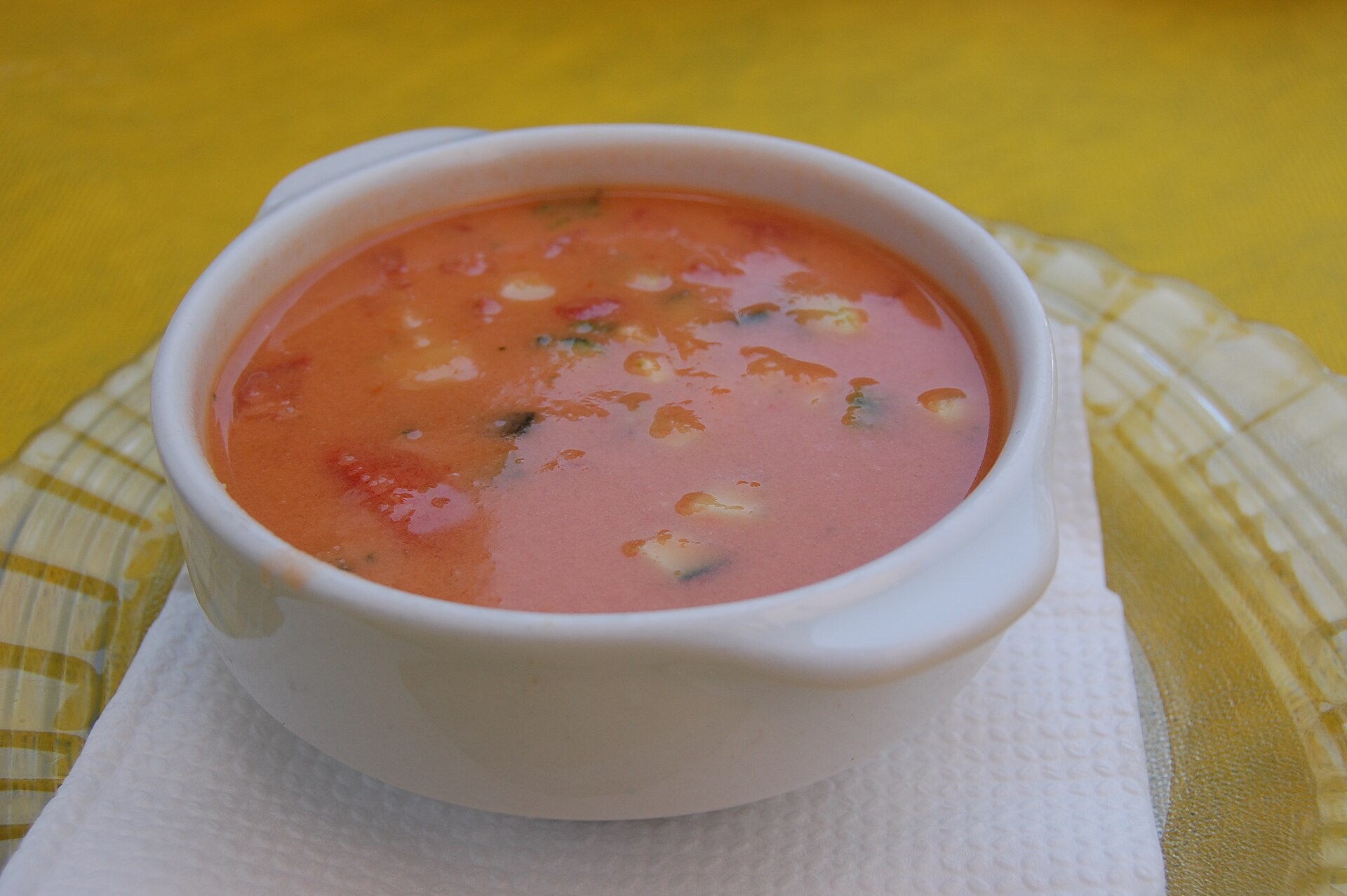
On a punishingly hot day, the kitchen does not always need a flame. Gazpacho turns ripe tomatoes, pepper, cucumber, olive oil and vinegar into a cold soup with body, aroma and a deliberate acid balance—not simply a glass of blended vegetables. The method is simple, but the result depends more on produce and tasting than on obeying one sacred formula.
This is Yummy Food’s respectful home interpretation of Andalusian gazpacho. We are not presenting it as the final or universal version: households and regions differ on bread, cucumber, onion, texture and garnish. Our aim is to understand the dish’s logic, then make it workable with ingredients commonly available in Saudi Arabia while keeping its Spanish context visible.
A summer dish, not one closed definition
Spain’s official tourism site places gazpacho in Andalusia and the spring–summer season. Its published recipe combines ripe tomato, green pepper, garlic, bread, olive oil and sherry vinegar, with chopped vegetables, egg or bread served separately. Other official pages mention cucumber or onion in some versions. Those differences are not mistakes to settle; they show a dish that belongs to many kitchens.
The word itself does not always mean the familiar red cold soup. Spain’s official site also documents gazpachos manchegos, a very different cooked dish. Here, therefore, we use the more precise description ‘Andalusian-style gazpacho’ and leave room for household and regional choices.
Building texture and flavour
Choose tomatoes that feel heavy and smell fragrant at the stem rather than judging by colour alone. Salt draws out juice, vinegar sharpens the fruit, and olive oil added gradually while blending gives the soup a rounded texture. Bread is not compulsory in every home, but it thickens the mixture and makes it more substantial, so our recipe keeps it optional and modest.
Chill the soup for at least an hour, then taste it again. Cold dulls our perception of salt and acidity, so the finished gazpacho may need a few drops of vinegar or a pinch of salt. If it is too thick, add cold water one spoonful at a time. If it is thin, blend in a little more tomato or a small piece of soaked bread rather than pouring in oil without purpose.
Straining is a style choice, not an authenticity test
A powerful blender produces a smooth base, and a fine-mesh sieve can make it silky by catching peel and seeds. Leaving some texture, however, feels pleasantly domestic and avoids waste. Both approaches are valid; neither should be used to police someone else’s table.
For Riyadh heat, chill the bowls and serve smaller portions, refilling them from the refrigerator instead of leaving a large jug on the table. Ice cubes quickly dilute the balance. Pre-chilled ingredients, water and serving ware are the more reliable route.
Food safety in a soup that is never cooked
Because the vegetables remain raw, wash hands, utensils and work surfaces, then rinse tomatoes, peppers and cucumber under cool running water—never with soap or detergent. USDA-supported UF/IFAS guidance says fresh produce should be refrigerated within two hours of peeling or cutting and cut tomatoes left for two hours at room temperature should be discarded.
When the air temperature is above 32°C/90°F, Yummy Food applies USDA’s more conservative general rule for perishables: one hour outside refrigeration. That is a food-safety decision for hot climates, not part of the dish’s tradition. Keep gazpacho at 4°C/40°F or below, serve it cold and use it within two days for the best balance of flavour and practical home safety.
A flexible home recipe for four
A light, medium-bodied version. Taste as you go because tomato sweetness and vinegar strength vary.
- Time
- 25 minutes + chilling
- Yield
- 4 servings
- Level
- Easy
Ingredients
- 1 kg ripe tomatoes, washed, stem ends removed and roughly chopped
- 1 small green pepper, deseeded and chopped
- ½ medium cucumber, chilled and partly peeled
- ½ small garlic clove, or to taste
- 40 g day-old crustless bread, optional
- 3 tbsp extra-virgin olive oil, plus a little to finish if desired
- 1–2 tbsp sherry vinegar; begin with less
- ½ tsp fine salt, then adjust after chilling
- 60–120 ml cold water, depending on the tomatoes and desired texture
- To serve: finely diced cucumber, pepper and tomato, optional
Method
- 01
If using bread, soak it in a little cold water for five minutes and squeeze gently. Prepare the vegetables with clean tools, away from raw meat or poultry.
- 02
Add the tomato, pepper, cucumber, garlic, bread, salt and 1 tablespoon vinegar to a blender. Blend until no large pieces remain.
- 03
With the blender running at medium speed, pour in the olive oil slowly until the mixture looks cohesive. Add cold water gradually only until it reaches your preferred thickness.
- 04
Taste and add more vinegar if needed, remembering that chilling will change the balance. Pass through a fine sieve for a silky texture if you wish; straining is optional.
- 05
Transfer immediately to a clean, covered container and refrigerate for at least one hour at 4°C/40°F or below. Do not leave it on the counter to cool.
- 06
Stir and taste while cold, then adjust salt, vinegar or water. Serve in chilled bowls with diced vegetables and a few drops of olive oil.
Sensible substitutions
- No sherry vinegar? Use a smaller amount of red-wine vinegar, then increase by taste. It performs a similar role but will not taste identical.
- For a gluten-free version, omit the bread or use a reliably labelled gluten-free loaf. Fleshy tomatoes usually need no replacement thickener.
- If raw garlic feels harsh, use a quarter clove or soak the piece in cold water for ten minutes. Garlic powder gives a different, less fresh profile.
Allergy note
- Traditional bread contains wheat and gluten. Check the full label of any substitute and consider cross-contact when cooking for someone with an allergy.
- The base recipe is plant-based and dairy- and egg-free, but optional garnishes can change that. Tell guests exactly what was added.
Quick safety checklist
- Rinse produce under cool running water only; do not use soap or detergent.
- Refrigerate the soup and cut produce within two hours, or within one hour when the air temperature exceeds 32°C/90°F.
- Keep gazpacho covered at 4°C/40°F or below and use a clean ladle each time.
- For best quality and practical home safety, finish it within two days and never pour served portions back into storage.
Sources and verification
Yummy Food reviewed these official sources and the image licence page on 6 August 2026. Sourced facts are separate from our editorial recipe choices.
- Gazpacho — Spanish cuisine recipeSpain.info, official tourism portal of Spain ↗
- Tomatoes and Other Seed-Bearing Vegetables: Safe Handling PracticesUSDA / UF-IFAS Extension ↗
- Keep Food Safe! Food Safety BasicsUSDA Food Safety and Inspection Service ↗
- Gazpacho in Mijas — image and licence recordWikimedia Commons ↗
Two useful tools for this recipe
Technique-led suggestions, without prices or availability claims.
Useful for blending directly in a deep container; a countertop blender works too.
Search Amazon.sa ↗02Fine-mesh kitchen sieveOptional for a silkier texture and for catching peel and seeds.
Search Amazon.sa ↗As an Amazon Associate I earn from qualifying purchases.